Welcome to the first issue of BTP! I am really excited to get this project off the ground with this first issue. I aim to publish bi-weekly and focus on the history of technology, empire, and contemporary technologies from an alternative perspective. But why start with ai? In contrast to much of the material on technology today, BTP is not particularly interested in debates and discussions around ai. In fact, contemporary ai will not feature much in the subsequent issues because there is already so much information available on the topic. This week, however, I have made an exception. It is precisely because of the saturation of information on the topic that I have decided to kick-off the newsletter. The aim is to lay the foundations for subsequent issues as we look back in time and venture across the globe to dissect what technology is, how it has been used, and how the past has influenced our understanding of technology today. BTP is concerned with the past and present. It is not interested in making bold and deterministic predictions. Think of this newsletter as an antidote to the current hype and the inverse doomerism that plagues discussions of technology. At risk of tumbling into trite cliches, the past, as any decent historian will tell you, shows us that little is determined or set in stone. While we might nod our heads in agreement to such an obvious statement, we seem to exclude technology from such standards when we talk about the wonderful and terrible futures that are always just beyond the horizon. In the words of historian David Edgerton, we not only ‘have the technological capacity to do things very differently’, but we are also ‘not technologically determined.’
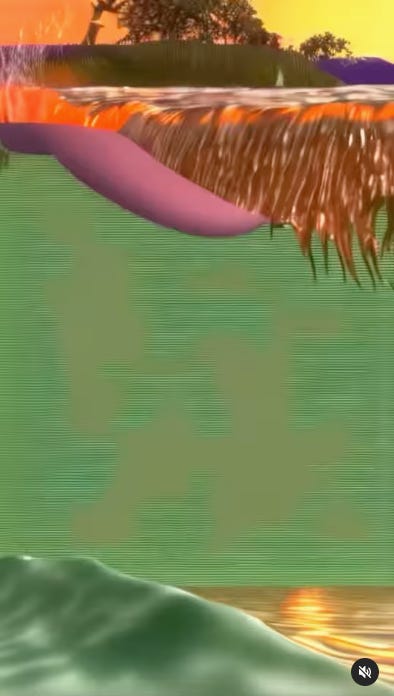
Childhood with a VHS filter over it: The ai artwork of Noper
In a widely circulated clip, Japanese animator legend Hayao Miyazaki told a stunned room of Japanese video game developers that ai animation “was an insult to life itself”. The comments were made after Miyazaki was shown a demo of an animated ai model developed by the game studio. When asked by Miyazaki’s producer what the company’s goal was in making such technology, an employee replied, “we would like to build a machine that can draw pictures like humans do.” The candid response captures the ambitious goal of generative ai companies to create perfect imitations of human art. There is something of a disconcerting irony that the quest for hyper-realistic images, music and text relies upon the repetitive and all too human labour of ghost workers. In contrast to ai’s pursuit of perfection in ironing out the uncanny valley like qualities of their products, Noper, a digital artist based in the US, explores the strangeness and imperfection of ai models to create surreal dreamscapes.
Graduating from Florida State University art school in 2019 and moving to China to teach English just before the start of the pandemic, Noper got involved in the NFT world during its boom in 2021. After returning to the US and failing to join the digital art world as an illustrator, Noper grew frustrated with ai art and the seeming ease that artists were able to produce images and sell them for extraordinary prices. His negativity towards ai art evolved into a fascination as he experimented by combing made environments in Blender and Photoshops neural filters. Noper’s style transformed with the evolution of the technology. He moved from Blender to using Stable Diffusion, a generative ai model that produces photorealistic images from text and image prompts. These models made it possible to produce ‘impossible looking pictures’ and push the visual limits of form and colour.
Mixing image, video and sound, Noper’s work recalls dreamscapes, nostalgia and ‘childhood with a VHS filter over it’. Noper’s dream-like videos does for visual arts what vapowave and hypnagogic pop have done for music. They’re simulacra, imitations without originals, blending generic images and videos into pastel colours to capture the essence of a memory and time locked in the past.
Noper’s work is not an “insult to life itself”. Instead, it reaffirms the human experience with all its shortcomings, illusions, misunderstandings, misinterpretations and idiosyncratic memories . Noper demonstrates how ai can be used to generate ai art that captures times and places that never existed in a way that hyper realistic renditions could never.
Why do new technologies and the nebulous idea of “innovation” imbue a sense of the the impossible? How did the elites of two centuries ago imagine the future? Historian of technology Iwan Rhys Morus explores how the American elite of the “Gilded Age” envisioned the future to come.
If we time travelled back to America’s Gilded Age, the closing decades of the nineteenth century, what would the future look like? The economy was booming as cities expanded and industrialization gathered pace. Railways spread across the country, fuelling westward expansion with the opening of the First Transcontinental Railway in 1869. European investors flooded this growing market as they jostled to cash in on American prosperity, and American speculators made their own fortunes, too. Day by day, the United States seemed to be accelerating into the future promised by industry. Nikola Tesla, reminiscing in later years about his 1884 arrival in New York, remembered thinking that America was “more than one hundred years AHEAD of Europe and nothing has happened to this day to change my opinion.”1
This new tomorrow was to arise through the power of innovation. In 1876, Americans celebrated a century of independence with the Centennial Exhibition in Philadelphia. The huge Corliss steam engine that dominated the main exhibition building was forty-five feet tall and, through a series of shafts more than a mile in length, powered almost every other machine present. At this same event, Alexander Graham Bell’s telephone was exhibited for the first time. And American ingenuity showed no signs of abating. Almost twenty years later, viewing Chicago’s Columbian Exposition in 1893, commentators believed they were seeing the stuff of which the future would be made — it was “a shining vision, serenely awaiting the admiration of the world”.2 What did the privileged elite of the Gilded Age, those who often funded and stood to profit most from this vision, make of all this? How would they think about their own place in the future that technological ambition and innovation seemed to offer?
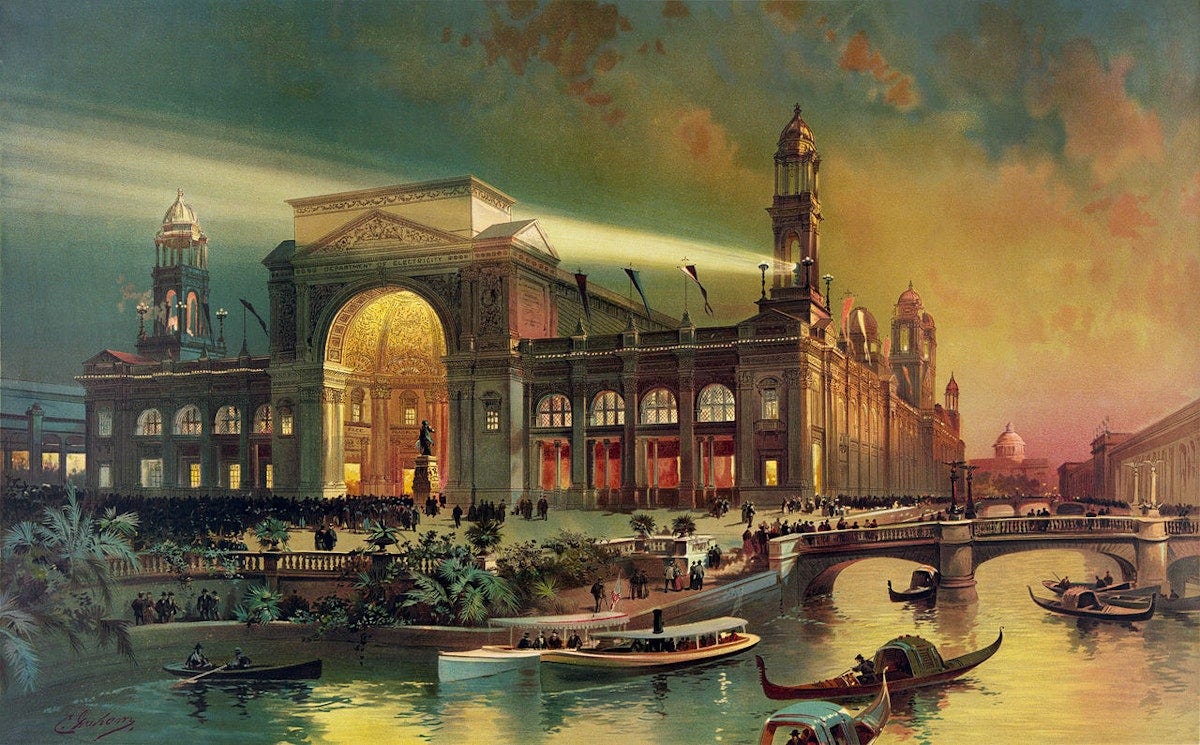
Lithograph of the “Department of Electricity”, which was powered at the 1893 World’s Columbian Exposition in Chicago using Westinghouse and Tesla’s alternating current technology — Source.
Luckily, one of them told us exactly how he imagined the century to come. In 1894, New York publishers D. Appleton and Company released A Journey in Other Worlds: A Romance of the Future, written by John Jacob Astor IV, one of America’s wealthiest men.
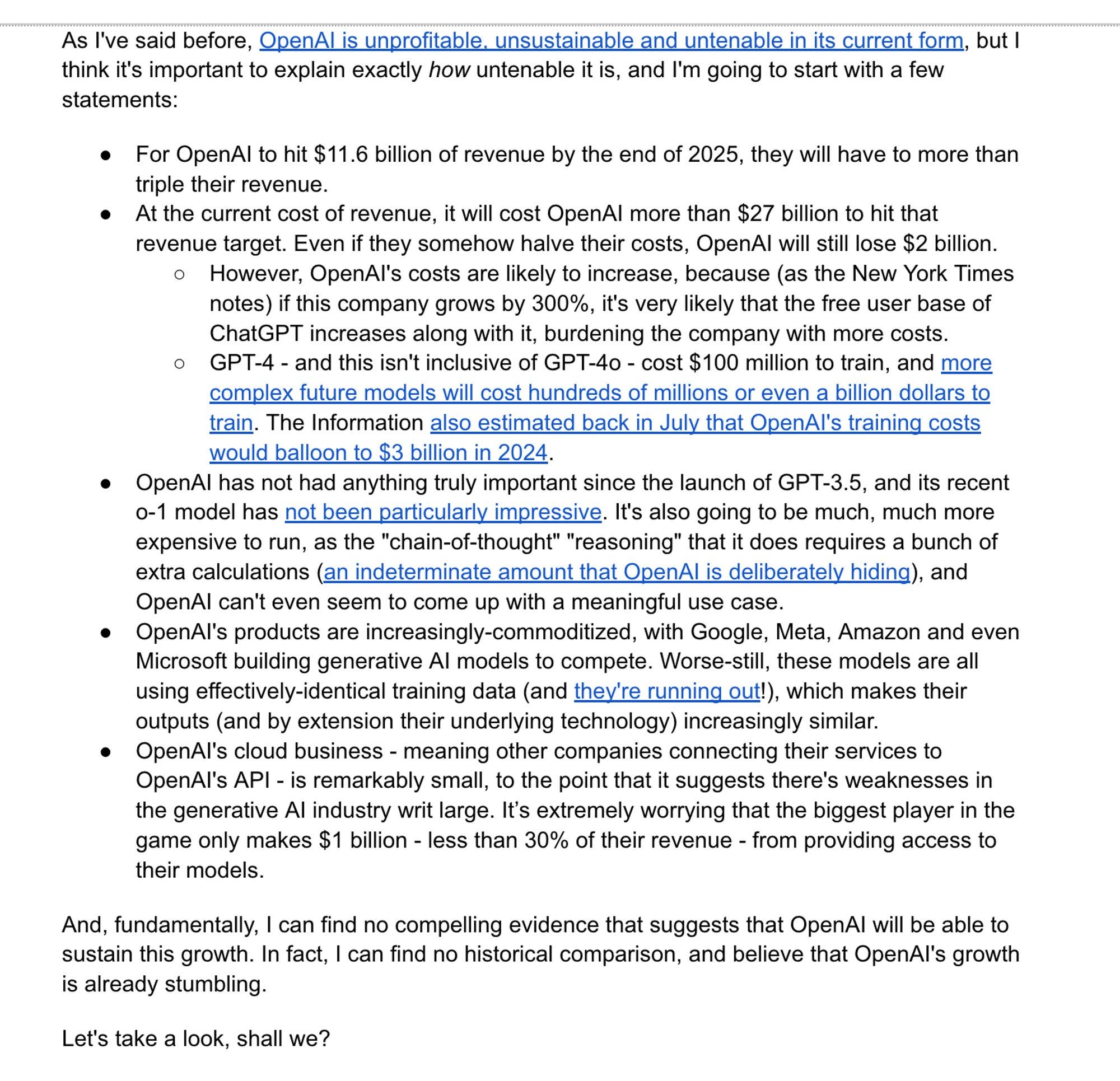
In this fascinating interview, Lee Vinsel and Emily Bender discuss the limits of ai and the assumptions driving the current ai bubble.
Peoples & Things host, Lee Vinsel, talks to Emily Bender, Professor of Linguistics, Director of the Masters of Science in Computational Linguistics program, and Director of the Computational Linguistics Laboratory at University of Washington, about her work on artificial intelligence criticism. Bender is also an adjunct professor in the School of Computer Science and Engineering and the Information School at UW; she is a member of the Tech Policy Lab, the Value Sensitive Design Lab, the Distributed AI Research Institute, and RAISE, or Responsibilities in AI Systems and Experiences; *AND*, with Alex Hanna, she is co-host of the Mystery AI Hype Theater podcast, which you should check out. Vinsel and Bender talk about the current AI bubble, what is driving it, and the technological potentials and limitations of this technology.